
In‑Depth Analysis + Verified Data from INEC, Yiaga Africa & Civil Society Observers
By A. S., Senior Correspondent
The just‑concluded area council elections in Nigeria’s capital have once again drawn attention to a troubling trend in the country’s democratic process — declining voter participation.
Conducted by the Independent National Electoral Commission across the six area councils of the Federal Capital Territory, official data shows that 239,210 voters participated out of approximately 1.68 million registered voters in the February 21, 2026 polls. This translates into about 14 percent voter turnout — a figure that, while modestly higher than the 9.4 percent recorded in the 2022 FCT area council elections, remains significantly low for the nation’s capital.
For a territory that hosts Nigeria’s political leadership and federal institutions, the numbers reveal a troubling paradox: high voter registration accompanied by persistently low election‑day participation — even when logistics are improved.
On the Ground: Voters Speak
Our reporter visited polling units in Garki and Wuse to gauge voter sentiment.
At a polling unit in Garki Area 10, turnout remained sparse even several hours after accreditation began.
A trader, T. A. S., who requested anonymity, said many residents no longer see local elections as meaningful.
“Most people believe the area councils don’t really change their daily lives,” they said. “That’s why many didn’t bother coming out.”
In Wuse Zone 4, civil servant G. K., also speaking anonymously, expressed similar frustration.
“There is too much disappointment in politics,” they said. “People believe the system doesn’t respond to their votes.”
Throughout the day, several polling units visited by reporters recorded thin queues despite the early arrival of election officials in many locations, a sign of broader voter disengagement that was noticeable across the FCT.
Observer Verdict: What Yiaga Africa and Situation Room Saw
Election observation group Yiaga Africa noted similar trends in its preliminary assessment of the area council polls. The civic organisation reported significant voter apathy across most areas monitored, along with logistical challenges including the late arrival of election materials and inadequate notice of polling unit reassignments, which affected voter turnout.
Yiaga Africa also highlighted the general peaceful conduct of the election but urged the electoral commission to strengthen public engagement and improve communication with voters to address apathy in future polls.
Similarly, the Nigeria Civil Society Situation Room — a coalition of civil society organisations that monitor elections — observed that limited public awareness of local government responsibilities and declining trust in political institutions are key contributors to voter apathy.
Media reports from outlets such as Premium Times, Daily Trust, and The Guardian Nigeria also noted low turnout across multiple polling units in Abuja, even though electoral officials from INEC arrived early in many areas.
What the Official Numbers Show
According to data released by the Independent National Electoral Commission:
- 1.68 million registered voters across the FCT
- 239,210 votes cast
- About 14 percent voter turnout
Official polling unit results are available through the INEC Result Viewing Portal (IReV):
https://inecelectionresults.ng
Although turnout is slightly higher than in 2022, it still means more than 1.4 million registered voters did not participate in the FCT polls.
INEC Chairman’s Perspective
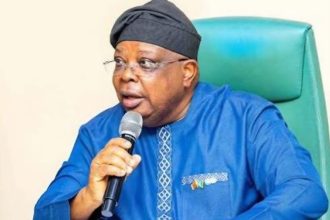
The 2026 election cycle is the first major test for Prof. Joash Ojo Amupitan, SAN, who was sworn in as Chairman of INEC in October 2025 following Senate confirmation.
Amupitan has publicly acknowledged the continued challenge of voter apathy in Nigeria, noting that improving participation requires more than efficient logistics — it hinges on strengthening public confidence in electoral institutions and broadening civic education nationwide.
Under his leadership, INEC has highlighted the importance of transparency and voter engagement as critical reforms needed ahead of the 2027 general elections, which he has warned will not be “100 percent perfect” but will benefit from improved systems and technology.
Expert Insight: Why Participation Remains Low
To understand the persistent trend of low voter turnout in the FCT, political analyst Abdullahi Jabi noted in a televised post‑election analysis that voter participation in local government elections has historically lagged behind national polls.
Jabi explained that many voters focus their attention on presidential or gubernatorial contests, while area council elections often receive less public mobilization, media coverage, and party attention. He also pointed to weak civic awareness about the functions of local councils — such as primary healthcare, local infrastructure, and sanitation — which directly affect citizens’ daily lives.
This disconnect, Jabi argued, contributes significantly to voter disengagement on election day.
The Abuja Paradox: High Registration, Low Turnout
The turnout figures highlight what analysts call the “Abuja paradox”:
- FCT is Nigeria’s political and administrative capital
- Hosts federal ministries, institutions, and a politically aware urban population
- Recorded a high Permanent Voter Card (PVC) collection rate — over 94 percent during the pre‑election exercise
Yet voter participation on election day remained low. This indicates that registration and access are not the main barriers — voter motivation and engagement are. Observation groups also reported that some reassignments of polling units caused confusion for voters, even though INEC sent SMS notifications to affected voters.
Experts attribute low turnout to a combination of:
- limited public understanding of local government roles
- weak grassroots mobilisation in urban communities
- economic hardship shifting political focus
- growing distrust in political leadership
- confusion over polling unit reassignment without adequate notice
Why the Election Matters
Although the area council election is local, trends in the Federal Capital Territory often mirror broader national political patterns. National voter turnout has historically declined, and the comparable apathy in the capital’s polls raises concerns that future elections — including the 2027 general election cycle — may witness similarly low engagement if underlying issues are not addressed.
Rebuilding Trust in the Electoral Process
Both civil society groups and election experts stress that reversing voter apathy requires:
- expanding civic education on the role of local governance
- improving transparency and accountability in area councils
- strengthening public trust in the electoral system
- comprehensive nationwide engagement on polling unit changes
- encouraging youth participation in grassroots politics
Without these efforts, analysts warn Nigeria faces a future where elections are decided by only a fraction of the electorate.
About the Author
A. S. is a Senior Correspondent covering elections, governance, and public policy. Their reporting focuses on democratic accountability and civic participation across Nigeria.