‘Fake’ Agency DG
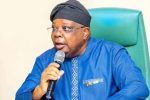
A video of Prince Adeniyi Adeyemi Matthew, the man at the centre of the alleged ₦1.3 billion “ghost agency” scandal, has resurfaced online on Monday as the controversy surrounding the purported government agency continues to intensify.
The video, recorded during a press conference held in late June 2026, showed Adeyemi defending his claim to the leadership of the alleged Presidential Foreign Intervention Promotion Council while directly challenging the position of the Presidency and the Office of the Chief of Staff to the President, led by Femi Gbajabiamila.
Adeyemi’s Defence: How Can a ‘Non-Existent’ Agency Appear in the Budget?
During the briefing, Adeyemi questioned how an agency described by the Presidency as non-existent could appear in official budget documents, arguing that the national budget does not emerge in isolation.
“The national budget does not emerge in isolation. It passes through multiple layers of technical drafting, executive coordination, ministerial inputs, Budget Office review, and finally legislative scrutiny by both chambers of the National Assembly,” he said.
He argued that the inclusion of the agency in official budget documents raised fundamental questions about the integrity of the entire budget process.
“The question becomes unavoidable: At what point in this process did references to a non-existent agency allegedly enter the official record? And if they are indeed present in official documentation, what does that imply about the integrity of the process that produced and approved those documents?” he asked.
CBN Accounts and the ₦12.5 Billion Allegation
Adeyemi further made a startling claim that the agency maintained several accounts with the Central Bank of Nigeria, including a domiciliary account, a pounds sterling account, and a Treasury Single Account—all domiciled at the CBN.
“Is it even possible to open an account with fictitious documents in a commercial bank in Nigeria today, let alone the Central Bank of Nigeria?” he questioned, challenging the narrative that the agency was entirely fabricated.
In perhaps his most explosive allegation, Adeyemi claimed that Chief of Staff Femi Gbajabiamila demanded 48 per cent of the agency’s proposed ₦27.4 billion take-off grant—amounting to approximately ₦12.5 billion. The Presidency has, however, consistently denied these allegations.
The Presidency’s Position
The Office of the Chief of Staff has maintained that the Presidential Foreign Intervention Promotion Council has no legal backing and was never established by the Federal Government.
According to the Presidency, Adeyemi forged official documents, including appointment letters bearing the names and signatures of senior government officials, to portray himself as the Director-General of the purported council.
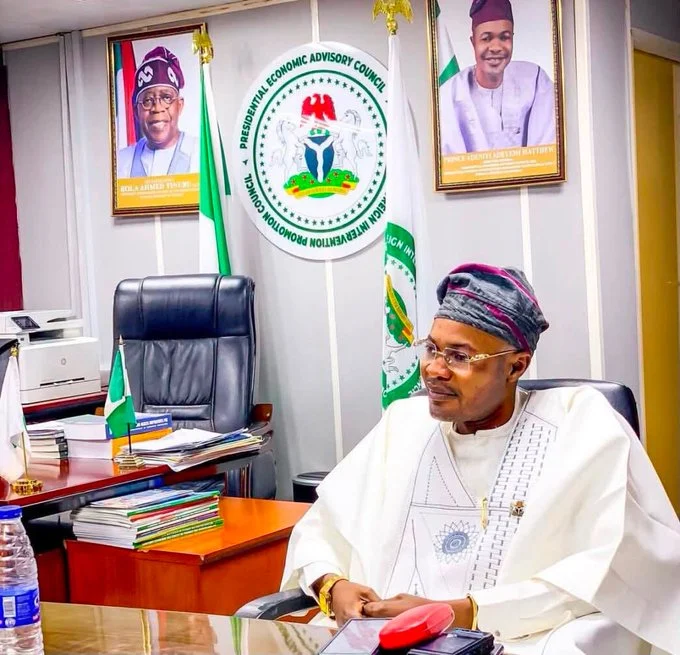
Authorities also alleged that he operated from an office inside Phase III of the Federal Secretariat Complex in Abuja, where he hosted meetings with government officials, diplomats, foreign investors, and members of the public while presenting himself as a senior government official.
The Budget Controversy
The controversy deepened after it emerged that an entity listed in the 2026 Appropriation Act as the Presidential Economic Advisory Council/Presidential Foreign Intervention Promotion Council received more than ₦1.3 billion in budgetary allocations. The reported allocation comprised approximately ₦803 million for personnel, ₦200 million for overhead, and ₦300 million for capital expenditure.
This revelation sparked widespread public scrutiny over how a body the Presidency now describes as fictitious appeared in the federal budget—a question that Adeyemi has repeatedly highlighted.
Court Proceedings
Adeyemi is currently facing an eight-count charge bordering on forgery, impersonation, false personation, and operating a fictitious government agency before the Federal High Court in Abuja.
The Presidency has maintained that the matter is before the court and urged the public to disregard his claims. Adeyemi, however, insists he is not an impostor and says the court will ultimately determine the dispute.
The case has drawn significant public attention, raising broader questions about budget oversight, the verification of government agencies, and the integrity of Nigeria’s budgetary process.