
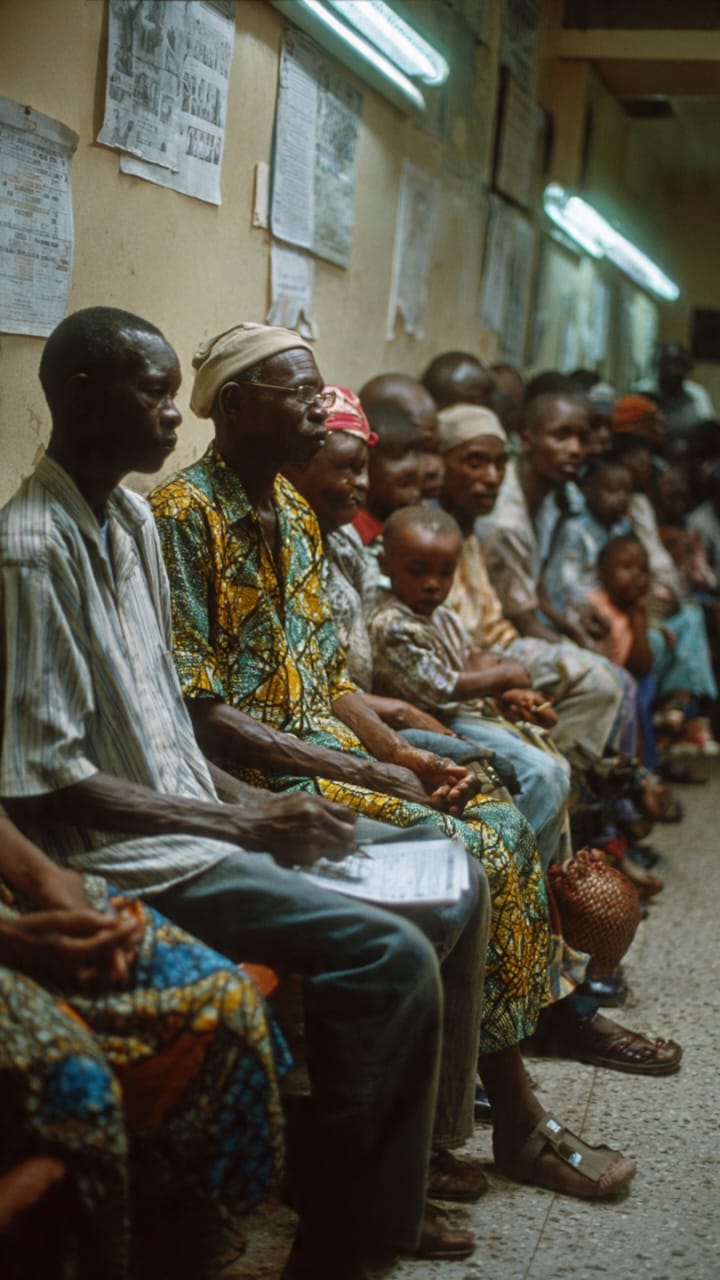
For many Nigerian families, illness brings not just physical suffering but a financial crisis that can push them into poverty. The choice between public and private healthcare is rarely about preference—it is about survival, constrained by harsh economic realities. With over 90% of Nigerians lacking health insurance, out-of-pocket payments dominate the healthcare landscape, consuming 71.9% of current health expenditure .
Understanding the cost landscape and available insurance options is essential for navigating Nigeria’s complex and unequal healthcare system.
The Out-of-Pocket Reality
Nigeria’s healthcare system is financed through a combination of general taxation, government funding, and individual payments, with the last category overwhelming all others . Out-of-pocket spending remains the dominant feature, accounting for up to 76% of total health spending .
Persistent public underinvestment drives this reliance. In 2024, only 4.8% of total public expenditure was allocated to health, far below the 15% Abuja Declaration target . This chronic underfunding has produced a system where private providers fill the gaps, catering for approximately 60% of the Nigerian population .
The consequences are starkly unequal. In 2018, the under-5 mortality rate was 173 deaths per 1000 live births in the poorest households compared to 53 in the wealthiest . Similarly, only 17.9% of mothers in the poorest wealth quintile deliver in a health facility, compared to 88.8% in the richest .
Public Healthcare Costs: The Cheaper but Imperfect Option
Public hospitals benefit from government subvention, which reduces operational costs and lowers what patients pay. Government provides infrastructure and pays health worker salaries, making public facilities significantly more affordable than private alternatives .
For childbirth, the cost differences are instructive. At Lagos Island Maternity Hospital, a normal delivery costs approximately ₦100,000, while a Caesarean section ranges from ₦150,000 to ₦300,000 or more . Across Lagos public hospitals, normal delivery costs are estimated at about ₦150,000, while CS ranges from ₦180,000 to over ₦350,000 .
However, public facilities face severe challenges: non-availability of drugs and medical equipment, poor infrastructure, and understaffing. According to a World Bank survey, 46.2% of public facilities reported not having electricity . Less than a quarter of facilities in Nigeria had reliable water, sanitation, and electricity .
The advertised costs in public hospitals can also be misleading. A CS listed at ₦100,000 to ₦200,000 can eventually cost two or three times as much after additional investigations, medications, and prolonged hospital admission are added . For babies requiring oxygen therapy, incubator support, or intensive neonatal care, daily expenses mount rapidly, placing enormous pressure on families.
Private Healthcare: Quality at a Premium
Private hospitals, which receive no government subvention, bear the full cost of providing healthcare services—staff salaries, electricity, security, water supply, and multiple taxes and levies . This is reflected in the prices they charge.
For childbirth, medium and lower-tier private hospitals typically charge between ₦1.5 million and ₦2 million for a CS, while high-end facilities in Lagos may charge as much as ₦3 million . Normal delivery at a private maternity hospital costs around ₦120,000, compared to ₦38,000 at a public general hospital .
For mental healthcare, the gap is equally stark: one therapy session can cost between ₦50,000 and ₦51,000, equivalent to a week’s worth of groceries for many families . Average drug charges are significantly higher in private facilities: ₦1,090 compared to ₦432 in public primary health centres .
The private sector offers quicker access to quality care at private clinics, hospitals, diagnostic centres, and specialist treatment facilities . However, reliance on private provision is associated with increased health inequities, as services are costlier and effectively exclude lower-income Nigerians from quality care.
Health Insurance: The Elusive Solution
Health insurance in Nigeria has historically been limited, with only about 9% of the population covered by public insurance and 2% by private insurance . The transition from the voluntary National Health Insurance Scheme (NHIS) to the mandatory National Health Insurance Authority (NHIA) in 2022 was intended to change this.
The NHIA Act of 2022 made health insurance mandatory for all Nigerians and legal residents, aiming to achieve Universal Health Coverage by 2030 . The Authority offers several programmes:
Formal Sector Social Health Insurance Programme (FSSHIP): For public and private sector employees. Employers pay 10% of the basic salary (or 3.25% in a consolidated salary structure) while employees contribute 5% monthly (or 1.75%) . This contribution substitutes the medical allowance .
Group, Individual and Family Social Health Insurance (GIFSHIP): For self-employed, unemployed, and informal sector workers. Individuals can enrol by visiting an accredited Health Maintenance Organization (HMO), choosing a plan, providing identification (commonly NIN), and paying a premium .
Vulnerable Group Fund: Subsidises healthcare costs for children under 5, pregnant women, elderly people, people with disabilities, and low-income individuals (earning ₦70,000 or less per month) .
State Social Health Insurance Schemes: Many states run their own health insurance agencies linked to NHIA, with enrolment through state offices and local accredited providers .
Tertiary Institutions Social Health Programme (TISHIP): Specifically for students in tertiary institutions .
The NHIA benefit package includes preventive care (including immunizations), inpatient care (up to 15 days per year), outpatient care, maternity care (up to four births), and primary care . Limited coverage is available for basic eye examinations, assistive devices, basic mental health counselling, basic dental care, and essential prescription drugs with a 10% copayment .
However, significant gaps remain. Specialist mental health care, palliative care, long-term care, rehabilitative care, and home visits are not covered . Kidney dialysis is limited to six sessions yearly .
Conclusion: Navigating the System
For most Nigerians, the choice between public and private healthcare is not a choice at all—it is dictated by financial constraints. Public facilities offer affordable care but often lack quality and reliability. Private facilities provide better service but at prices that exclude the majority.
Health insurance, particularly through NHIA, offers the most promising pathway to financial protection. The 2022 Act’s mandatory framework, if effectively implemented, could expand coverage significantly. President Tinubu’s directive requiring all Ministries, Departments, and Agencies to enrol employees in NHIA plans, and making NHIA certification mandatory for procurement, licenses, and permits, signals growing political will .
However, systemic challenges remain. Only 21.7 million Nigerians, out of more than 230 million, had health insurance by the end of 2025 . Nigeria’s Universal Health Coverage service coverage index of 47 falls below the sub-Saharan Africa average of 50 . The insurance market remains fragmented, with private HMOs operating alongside the NHIA, and informal sector enrolment remains low .
For individuals, understanding the available options is crucial. Formal sector employees should confirm their NHIA enrolment. Self-employed Nigerians can enrol through accredited HMOs under the GIFSHIP programme. Those in qualifying vulnerable groups may be eligible for subsidised coverage .
Healthcare in Nigeria remains a luxury for many. But with informed choices and expanding insurance coverage, the burden of illness need not also be a sentence of financial ruin.